


Getting Started with Writing Personal Statements
Updated: Aug 29
Writing a personal statement can feel like standing at the edge of a vast ocean, unsure of where to dive in. I remember the first time I sat down to write mine. The blank page seemed intimidating, almost like it was daring me to reveal my story in a way that felt authentic yet compelling. But over time, I learned that writing personal statements is less about perfection and more about reflection, honesty, and clarity. If you’re preparing to write yours, I want to share some insights and practical tips that helped me navigate this process with confidence.
Understanding the Heart of Writing Personal Statements
At its core, a personal statement is your chance to speak directly to the admissions committee. It’s not just a summary of your resume or a list of achievements. Instead, it’s a narrative that reveals who you are, what motivates you, and why you are a perfect fit for the program you’re applying to.
When I first approached my statement, I asked myself: What moments shaped my academic journey? What challenges did I overcome? What are my passions and goals? These questions helped me move beyond surface-level details and connect with my deeper motivations.
Here are some practical steps to get started:
Reflect deeply: Take time to journal or brainstorm about your experiences, values, and aspirations.
Identify your unique story: What sets you apart from other applicants? Maybe it’s a particular project, a personal challenge, or a defining moment.
Keep your audience in mind: Admissions committees read hundreds of statements. Think about what they want to learn about you that isn’t obvious from your application.
By focusing on these elements, your personal statement becomes a genuine reflection of your journey rather than a generic essay.

Taking time to reflect on personal experiences can clarify your statement’s direction.
Crafting Your Narrative: The Art of Writing Personal Statements
Once you have a clear sense of your story, the next step is to shape it into a compelling narrative. Writing personal statements is about weaving your experiences and goals into a story that flows naturally and keeps the reader engaged.
I found it helpful to think of my statement as a conversation. Imagine you’re sitting across from the admissions committee, sharing your story with warmth and honesty. This mindset helped me avoid overly formal or stiff language, making my writing more relatable.
Here are some tips to craft your narrative effectively:
Start with a hook: Open with an engaging anecdote, a question, or a vivid image that draws the reader in.
Show, don’t just tell: Use specific examples to illustrate your points. Instead of saying “I am passionate about research,” describe a project that ignited that passion.
Maintain a clear structure: Typically, a personal statement includes an introduction, body paragraphs that explore your experiences and goals, and a conclusion that ties everything together.
Be concise and focused: Avoid unnecessary details. Every sentence should serve a purpose.
Use varied sentence lengths: Mix short, impactful sentences with longer, reflective ones to create a rhythm that keeps the reader interested.
Remember, your personal statement is your story. Let your voice shine through, and don’t be afraid to show vulnerability or enthusiasm.

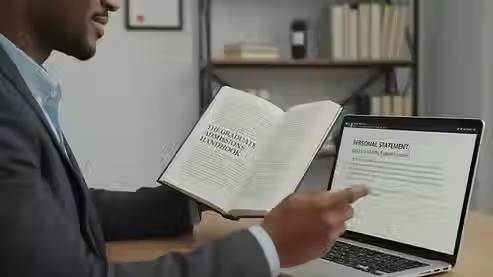
Drafting your statement on a laptop allows for easy editing and refining.
Overcoming Common Challenges in Writing Personal Statements: Getting Started with Writing Personal Statements
Writing personal statements is not without its hurdles. I faced moments of self-doubt, wondering if my story was interesting enough or if I was saying the right things. If you find yourself stuck, know that this is a normal part of the process.
Here are some common challenges and how to overcome them:
Feeling overwhelmed by the blank page: Start with freewriting. Set a timer for 10 minutes and write whatever comes to mind about your journey. Don’t worry about grammar or structure yet.
Struggling to find a unique angle: Think about moments that changed your perspective or taught you something important. These often make compelling focal points.
Balancing humility and confidence: It’s okay to acknowledge your weaknesses or failures, but always frame them in terms of growth and learning.
Editing without losing your voice: After writing your first draft, take a break before revising. Read your statement aloud to ensure it sounds like you.
If you need extra support, consider seeking feedback from mentors, peers, or professional services. Sometimes, an outside perspective can illuminate strengths or gaps you hadn’t noticed.
Practical Tips for Polishing Your Personal Statement
After pouring your heart into the first draft, the next phase is polishing your statement until it shines. This stage is crucial because clarity and professionalism can make a big difference in how your statement is received.
Here are some actionable recommendations for refining your personal statement:
Proofread carefully: Look for grammar, spelling, and punctuation errors. These small mistakes can distract from your message.
Check for flow and coherence: Make sure each paragraph transitions smoothly to the next. Use linking phrases like “Furthermore,” “In addition,” or “This experience led me to…”
Avoid clichés and jargon: Admissions committees read many statements filled with overused phrases. Be original and clear.
Stick to word limits: Respect the guidelines provided by the program. Being concise shows respect for the reader’s time.
Get feedback: Share your statement with trusted individuals who can provide constructive criticism.
Taking these steps will help your personal statement stand out as polished, thoughtful, and sincere.
Embracing the Journey Ahead
Writing a personal statement is more than just a task to check off your application list. It’s an opportunity to pause, reflect, and articulate your academic and personal journey in a way that resonates deeply. When I look back, I realize that the process helped me understand myself better and clarified my goals.
If you’re applying to graduate programs, residencies, or fellowships, remember that your personal statement is your voice in a sea of applications. It’s your chance to connect, inspire, and make a lasting impression.
For those seeking additional guidance, resources like graduateschool offer valuable support to help you craft a statement that truly reflects your unique strengths.
Take your time, be honest, and trust that your story matters. The path ahead is exciting, and your personal statement is the first step in sharing your journey with the world.
Getting Started with Writing Personal Statements


Comments